Our researchers trusted ChatGPTmore than our own AI.So I redesigned it to earn that trust.
Betty is Alicorp’s internal AI. It runs on a private model, so research, financial and customer data never leaves the company. It worked; people just didn’t use it. I led design and research for Betty 2.0, from the first interview to the handoff.
My role
Product design lead: research, strategy and design
Team
Me, 2 researchers, a full-stack engineer and an AI engineer
Users
Research, insights, innovation and CX teams
Status
Betty 2.0 shipped · Finsight, for finance, up next
01 — In 30 seconds
The problemPeople trusted ChatGPT more than Betty: too many steps, no memory and answers nobody could check.
What I did15 interviews, a heuristic audit, a team workshop and a usability test before any code was written.
The key decisionMake every answer verifiable, with a link to its exact source.
The resultBetty 2.0 shipped. First-week users went from 3 who quit to 14 who became ambassadors.
02 The problem
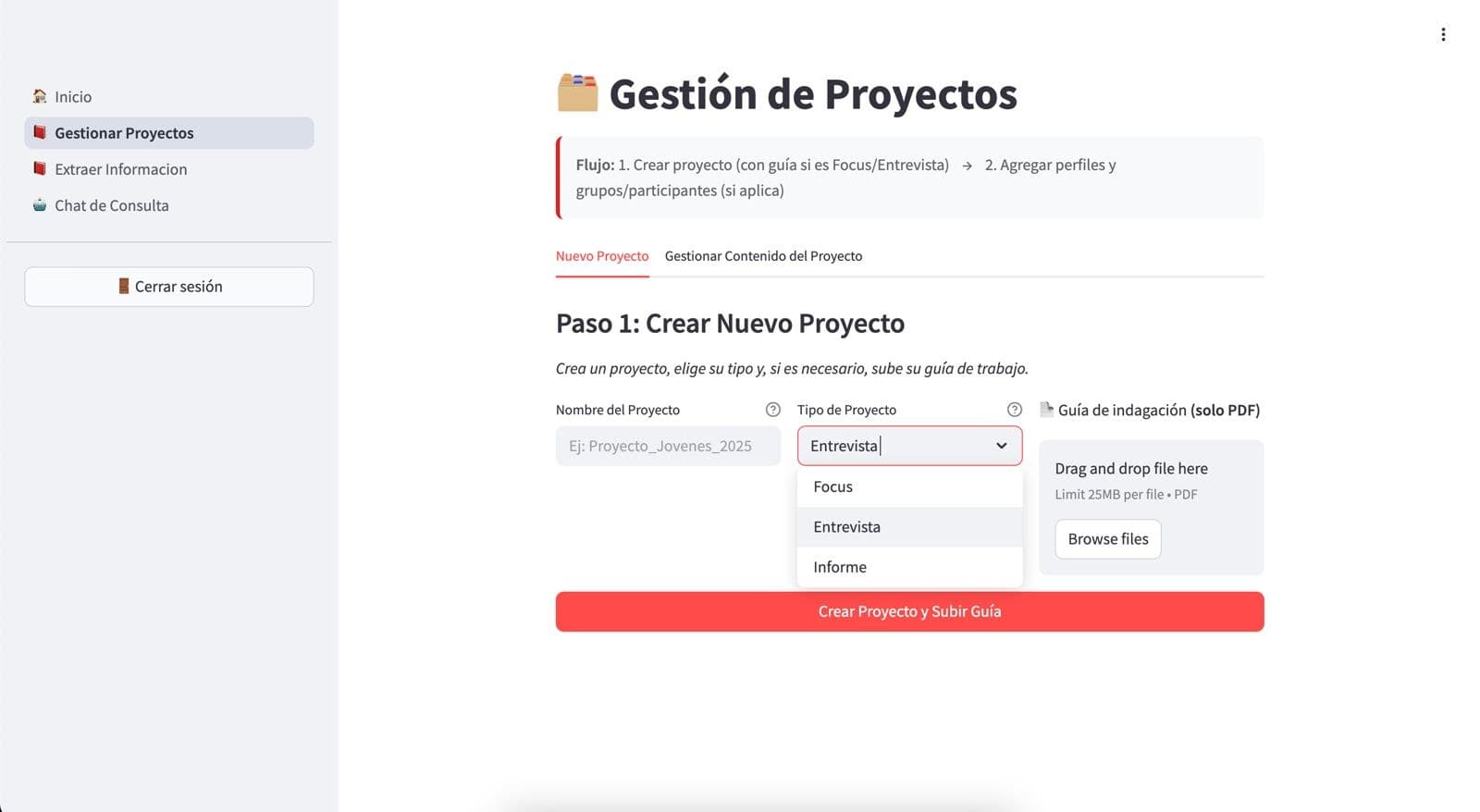
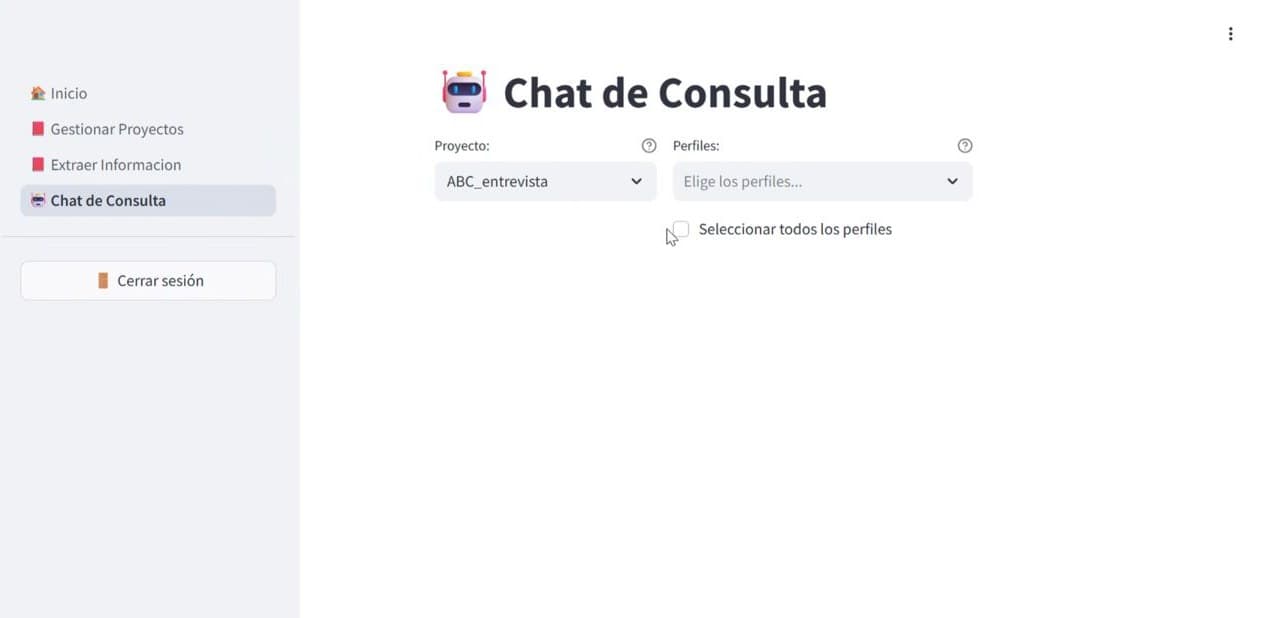
Betty v1.5 was built engineering-first: secure, closed and good at transcription, but organised like a back office. Before you could ask anything, you created a project, picked its type, uploaded a guide and selected participant profiles.
v1.5 · Step 1 of several before the first question
v1.5 · The “chat” opened on two dropdowns
Active users · shallow results“It says one thing, then another.”
Occasional users · too many steps“You log in, pick the project, and only then can you ask.”
Non-users · unclear value“I don’t see it being useful beyond qualitative studies.”
Quotes translated from Spanish and anonymised.
03 Research
15remote interviews with research teams: 7 who use Betty, 8 who don’t. Mixed seniority, every usage pattern.
Who we spoke to
Human Insights6
Research & Behavioral4
Innovation2
Alicorp Soluciones2
Customer Experience1
The headline finding: adoption wasn’t limited by need, but by an experience that didn’t communicate value, didn’t earn trust and didn’t save time. People wanted ChatGPT-simple summaries and quotes, and they wanted Betty to become the company’s memory.
04 Diagnosis
I audited v1.5 against Nielsen’s heuristics plus two human-AI frameworks, Google PAIR and Microsoft HAX, and benchmarked NotebookLM and Condense.
CriticalTime to valueUploading files felt like paperwork. People quit before reaching the model’s output.
CriticalMemory and contextNo history, no projects. Every question started from zero, so Betty felt like a form, not a colleague.
High riskTrust and errorsWithout sources, users re-checked everything by hand, wiping out the time Betty saved.
ImprovableTask fitUsers wanted a “brain” for analysis; Betty offered “hands” for transcription. And nobody knew how to prompt it.
05 Aligning the team
Findings don’t change a product until the whole team owns them. I designed and ran a workshop that turned 8 pains into 8 design opportunities, and those into product requirements.
10′ContextResearch and heuristic findings, shared.
10′Warm-up“Design the worst possible Betty, one nobody would ever use.”
50′How might weThree HMWs, one per team.
15′PrioritiseWhat to prototype and test first.
A requirement that came out of it“Anyone should understand what Betty is for in under 30 seconds, in plain language, without exploring the platform.”
06 The hardest call
How does a private AI win against ChatGPT?
A · Match its featuresImages, reports, charts. A race we couldn’t win with a smaller, private model.
B · Lean on securityTrue, but users recognised it without feeling it. “Secure” alone didn’t make anyone open it.
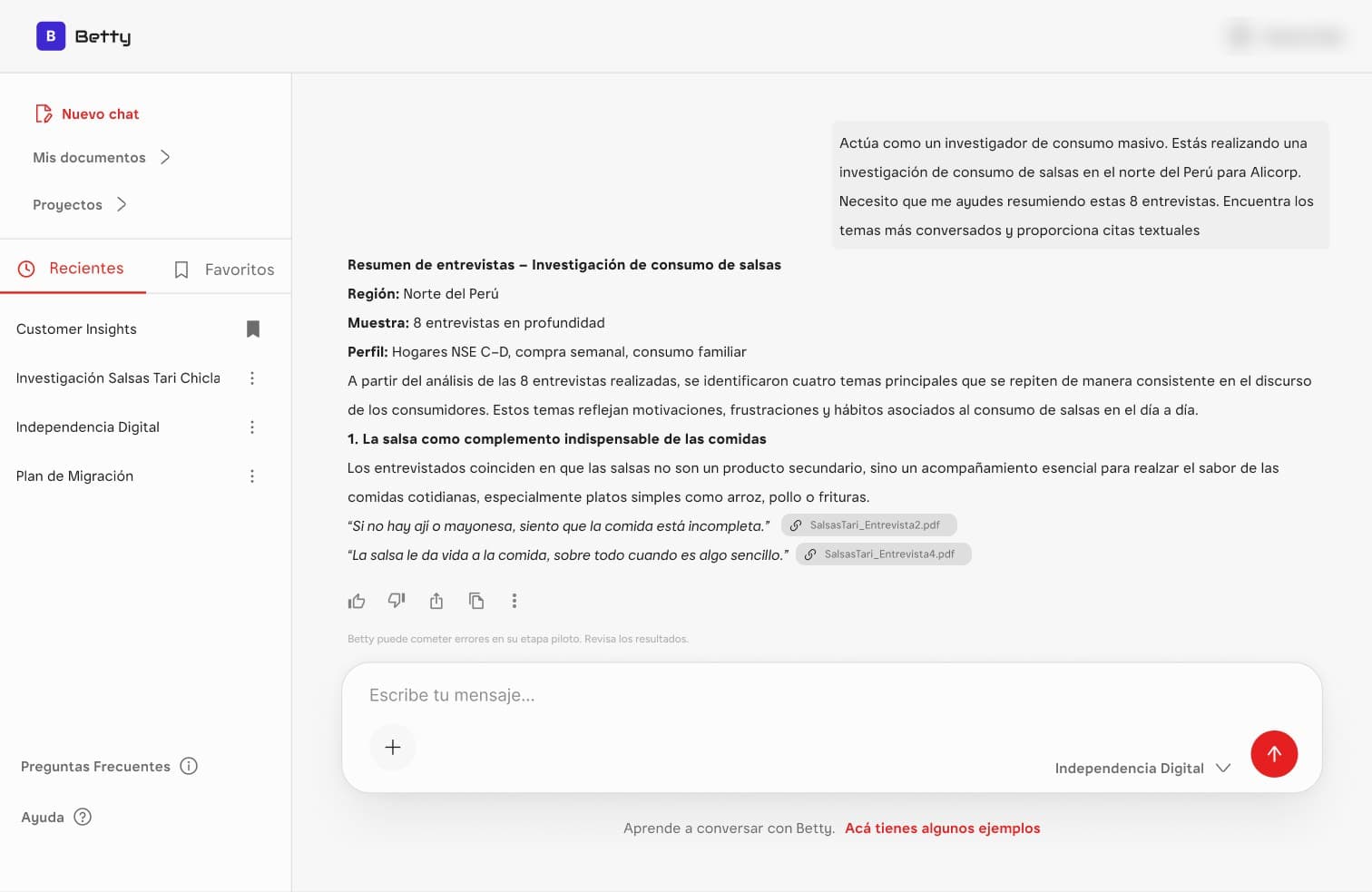
C · Chosen: be verifiableEvery answer links to its source, the PDF page or the video timestamp. Trust becomes something you can click.
ConversationalThe chat is the centre, not the settings.
VerifiableEvery answer shows where it came from.
07 Testing before building
Before development, we ran a moderated, in-person usability test of the prototype with 5 colleagues across high, medium and low usage, covering login, onboarding, home and file management. Every finding got a design response.
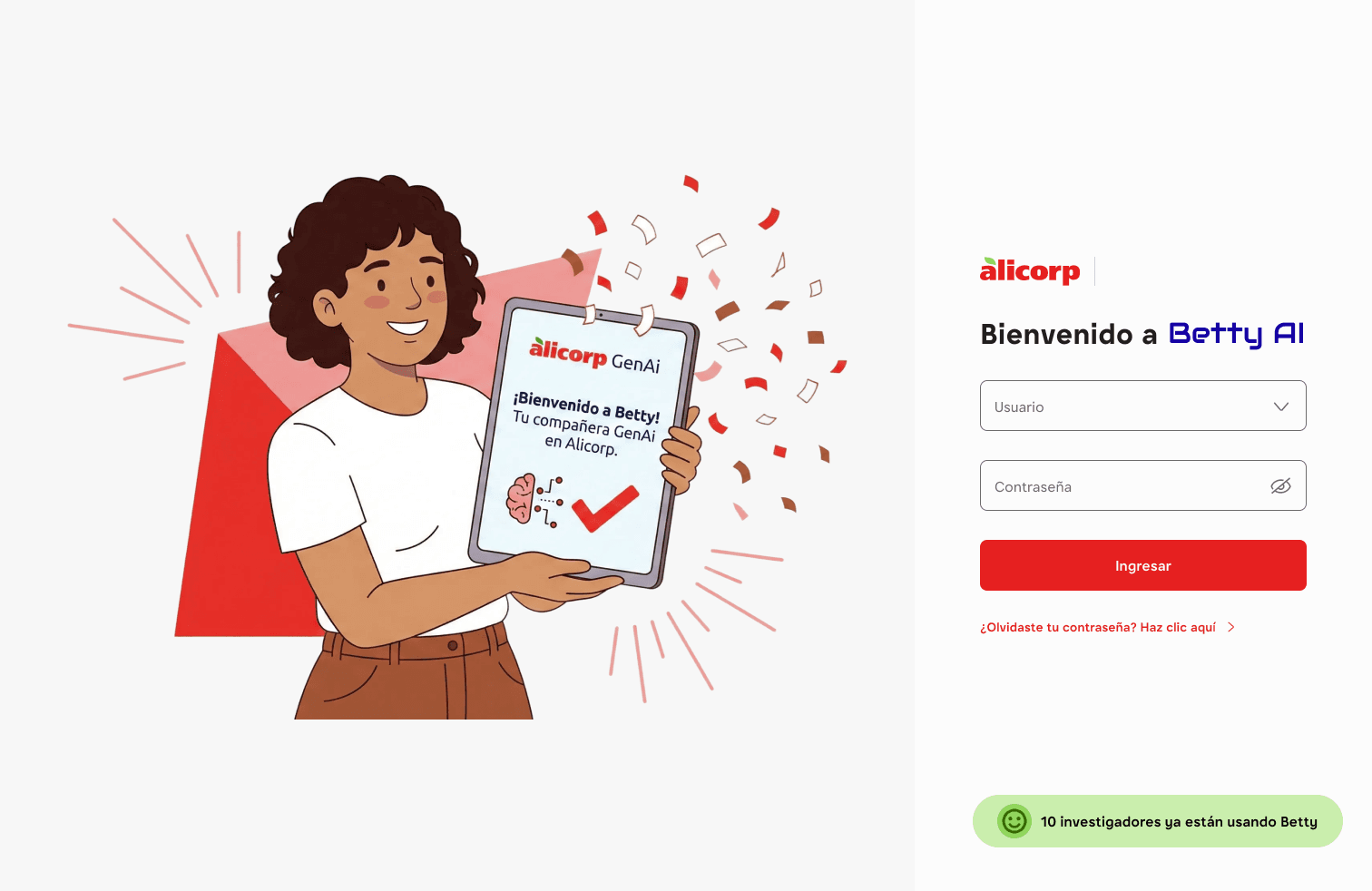
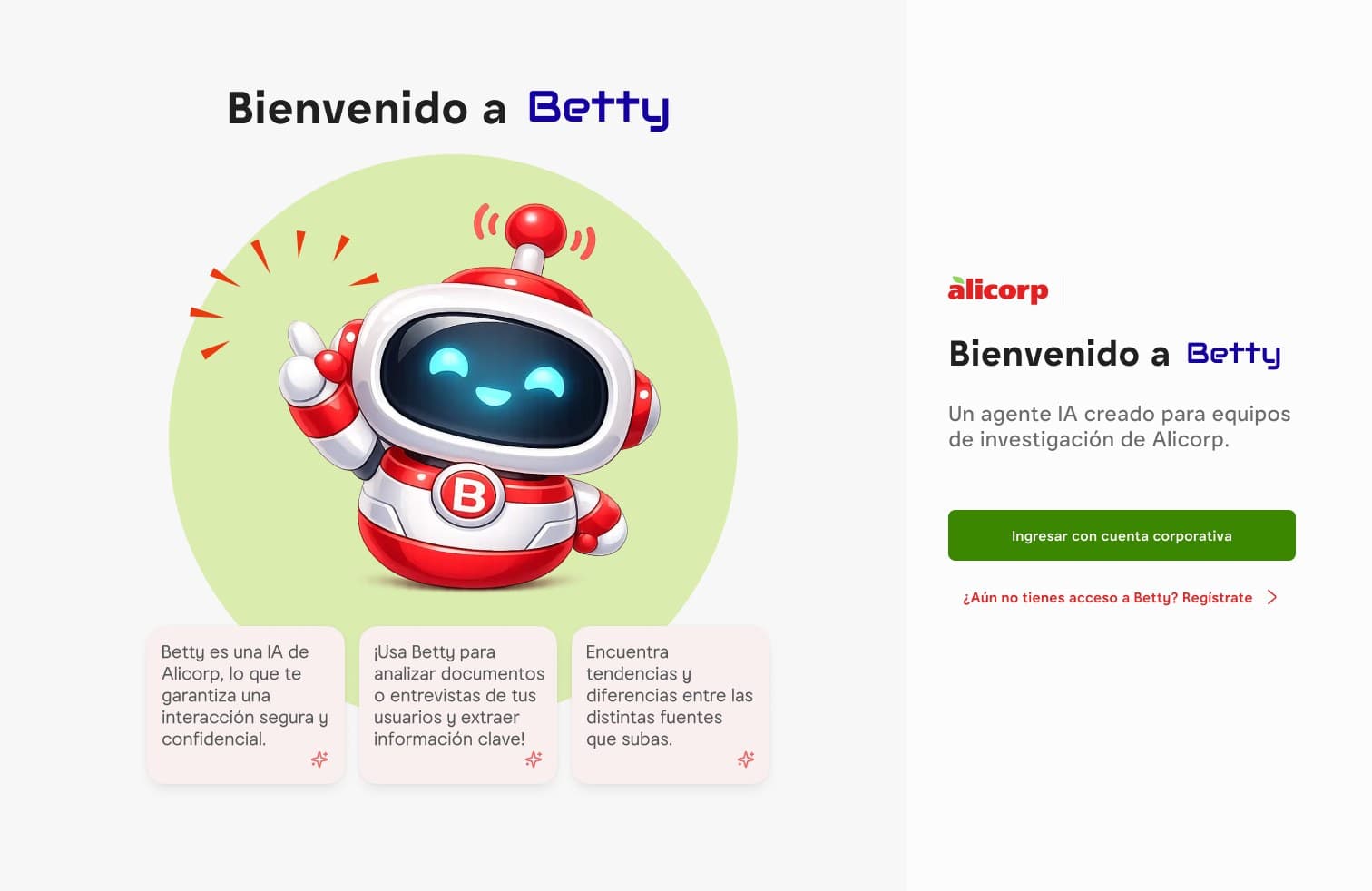
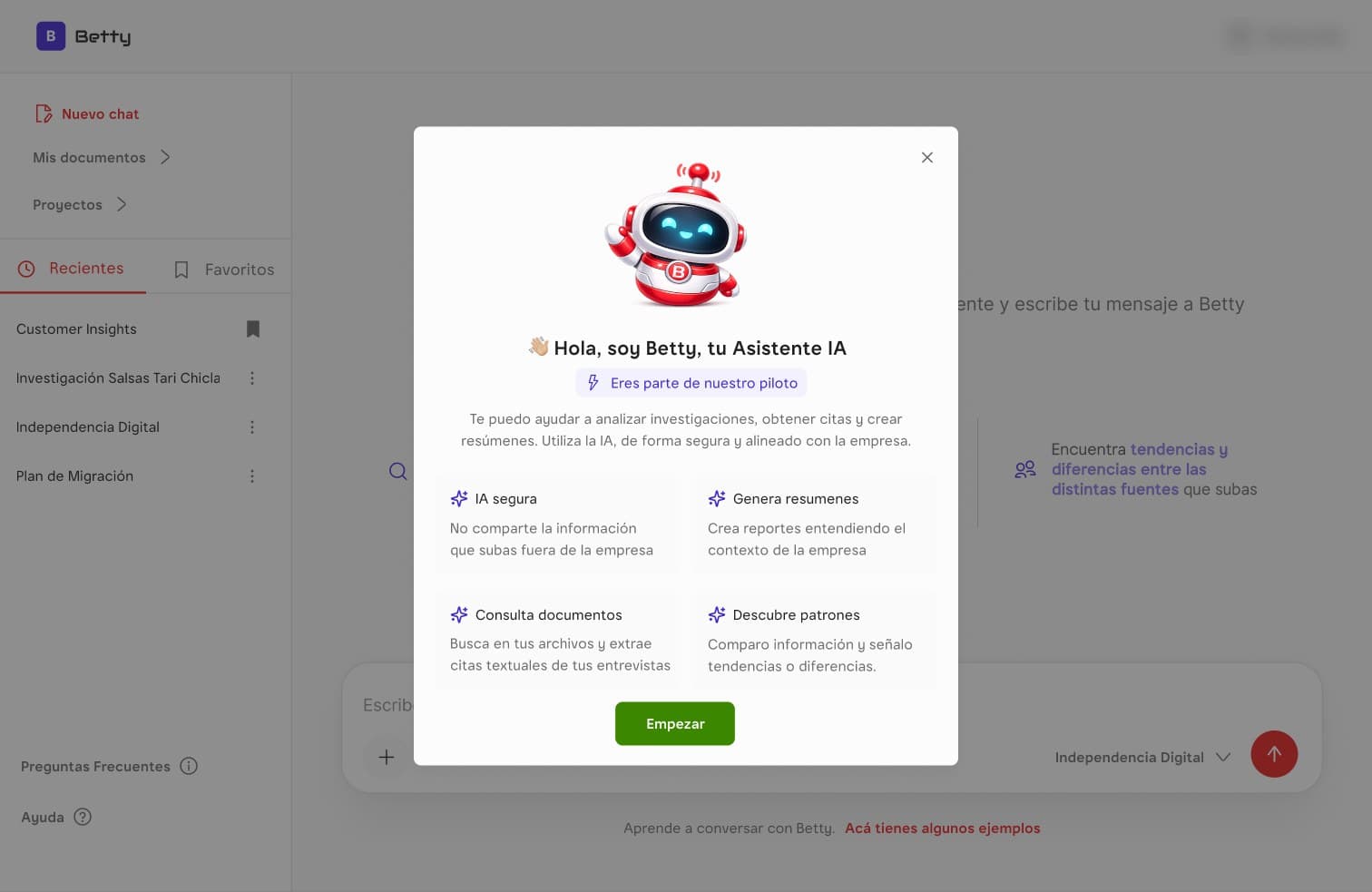
Heard: the human illustration read as a colleague, not as an AI.Design response: a robot mascot that says “tech” at a glance.
Heard: people expected to chat first; uploading felt like a locked door.Design response: a chat-first home. Files are optional and contextual.
Heard: onboarding helped once, but annoyed on every login.Design response: shown on first access and after updates only; the rest lives in FAQ.
Heard: “Does it use Google, or only our files?”Design response: cited sources, plus a clear note on what Betty doesn’t do.
Heard: “Another password?” Users wanted their work login.Design response: sign-in with the corporate account.
Tested prototype
Read as a colleagueDidn’t motivate use
A human illustration, yet another password and a user counter.After the test
Corporate sign-in
A mascot that reads as AI, three concrete promises and one sign-in.
One participant pointed out that a female-named assistant can reinforce gender stereotypes. It was a single voice, but I documented it as a naming recommendation for the next phase.
08 Betty 2.0
Verifiable: every quote links to its file
Cited answers. Quotes come with a chip that opens the exact source, so researchers don’t have to re-read transcripts to double-check Betty.
Onboarding, once. Four things Betty does well, and that your data stays inside. Mascot concept generated with AI and art-directed by me.
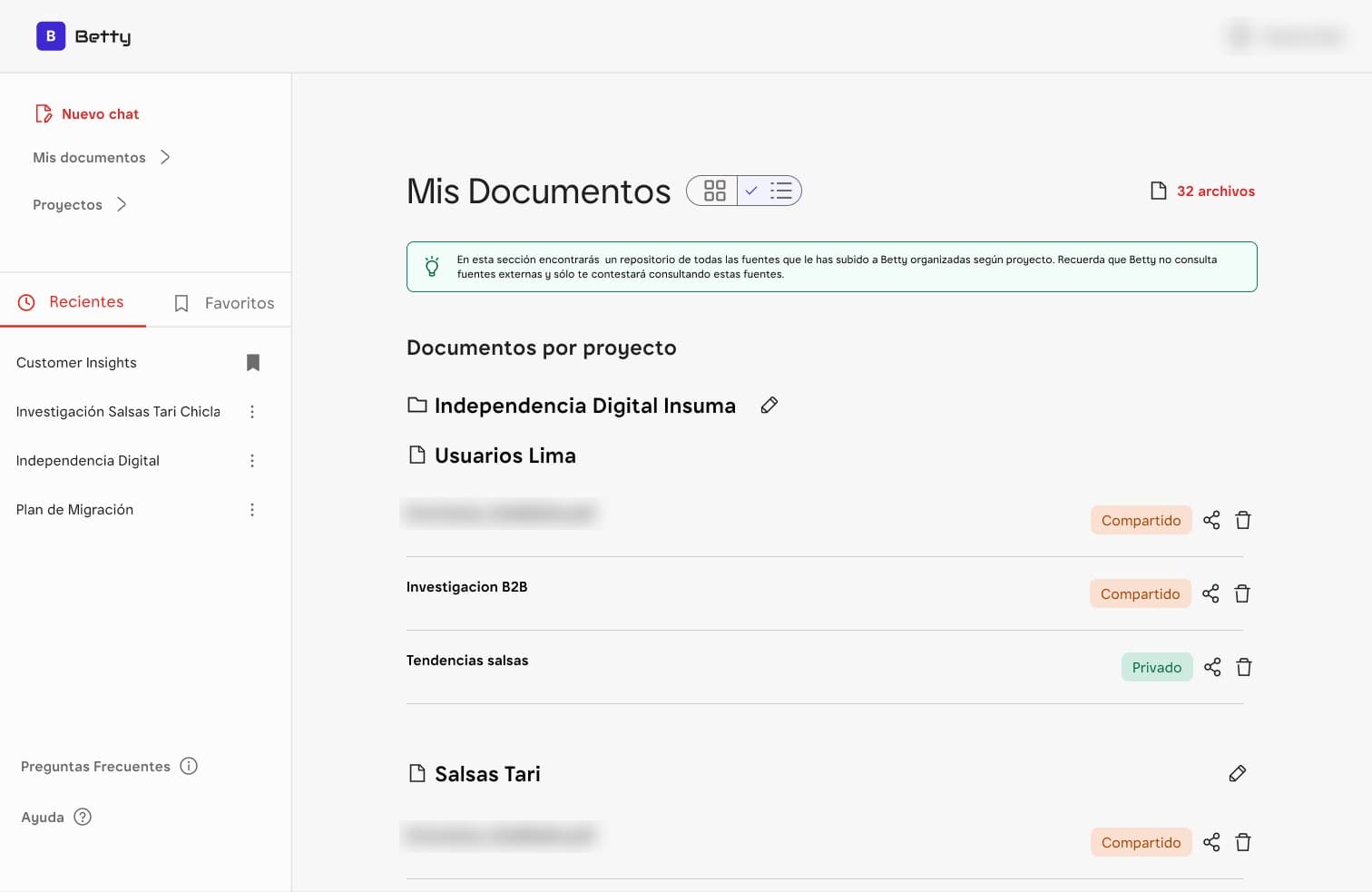
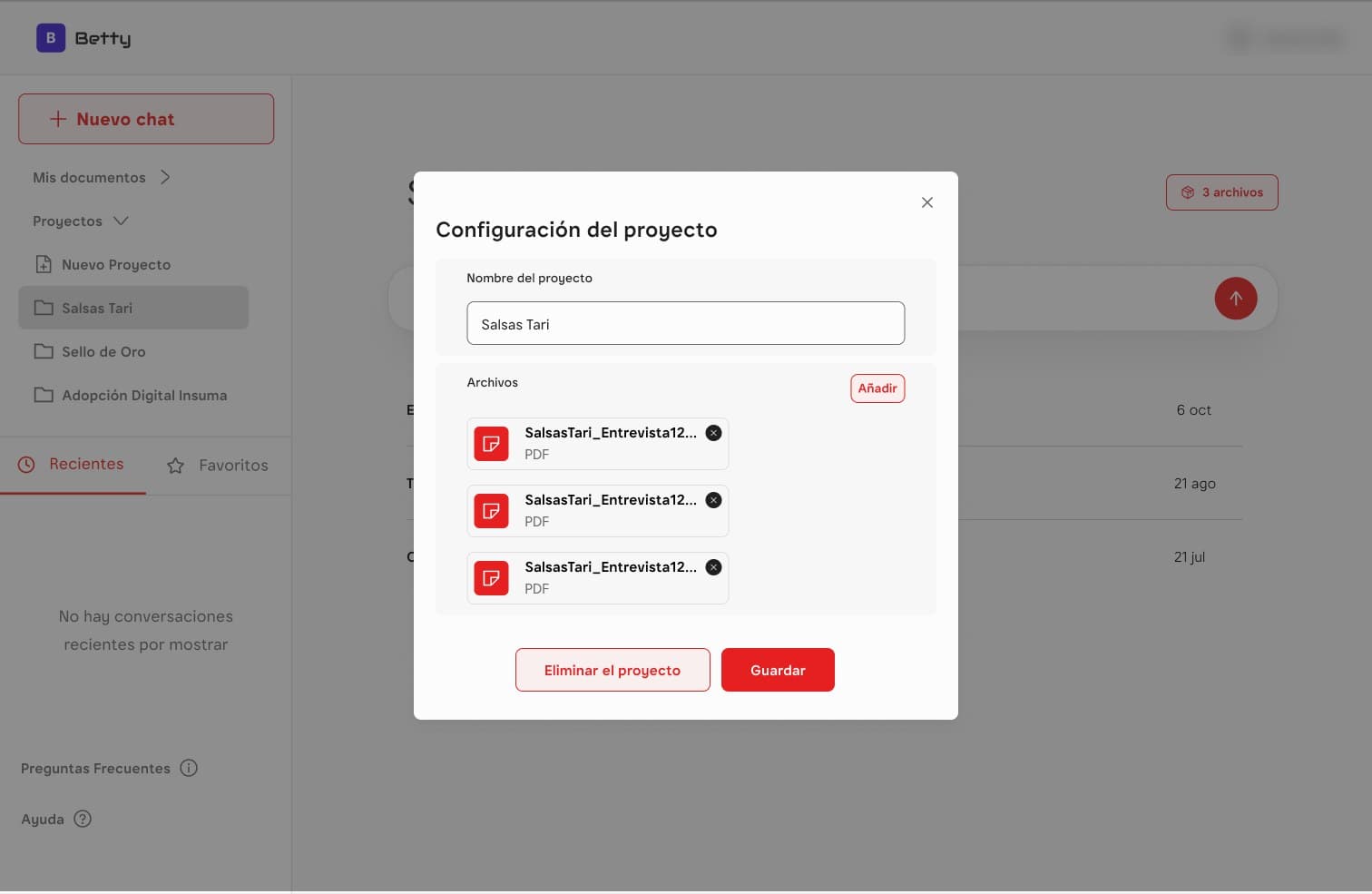
Invisible storage. No detour to Google Cloud. Files live in projects, shared or private, and Betty answers only from them.
Projects as memory. Chats and files stay together in a sidebar, so context survives between sessions.
09 Impact
First week, before and after3→14v1.5: 3 people tried it twice and dropped it within a week. Betty 2.0: 14 heavy users with no training, who became ambassadors and taught their own teams how to use it.
What users told usFor the first time, they could see what other research teams had already studied: no duplicated studies, no re-interviewing the same consumers.
Fewer hallucination reportsReported by the team after cited answers shipped.
Next: FinsightBetty’s extension for querying the company’s financial data, bringing finance teams in.
ExpandingWhen I left, Betty was rolling out to marketing and supply chain.
The lesson I took with me: with enterprise AI, trust is a design problem before it’s a model problem.